
How Does a Tension Wheel Support Stable Motion in Industrial Systems?
Article Abstract
A tension wheel plays a critical role in maintaining belt, chain, or cable stability across a wide range of industrial transmission systems. This article provides a comprehensive explanation of how a tension wheel works, why it is indispensable for mechanical efficiency, and how its structural parameters influence operational reliability. The content is structured to align with search behavior and technical reading habits, offering a detailed product overview, engineering parameters, common technical questions, and future-oriented insights. The discussion is presented in four integrated sections to ensure clarity, depth, and practical relevance.
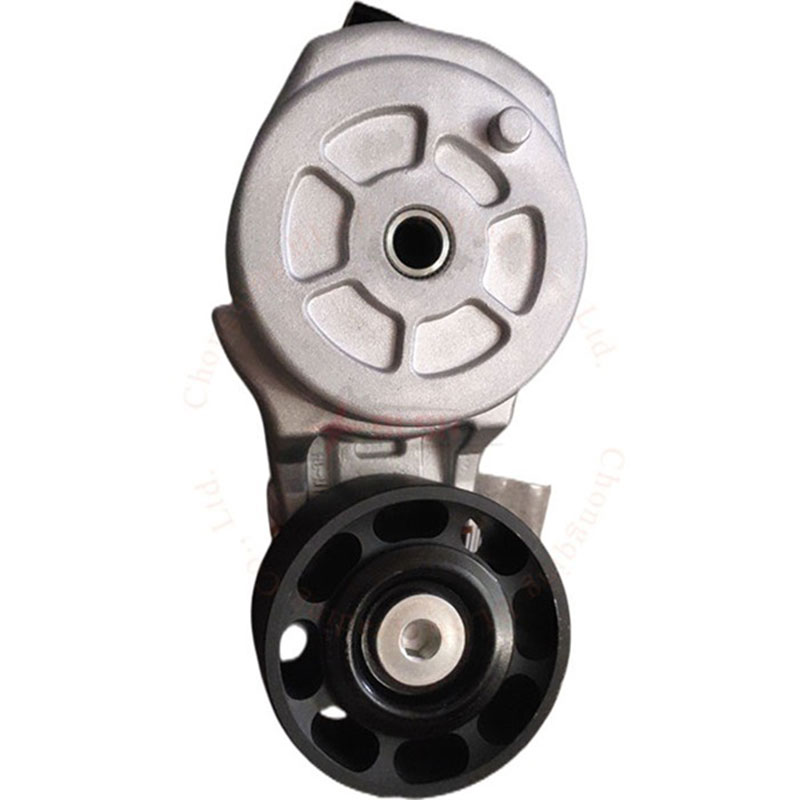
Table of Contents
- 1. How Does a Tension Wheel Function Within Mechanical Systems?
- 2. How Do Tension Wheel Parameters Influence Performance?
- 3. How Is a Tension Wheel Selected for Different Industrial Applications?
- 4. How Will Tension Wheel Technology Evolve in Future Industries?
1. How Does a Tension Wheel Function Within Mechanical Systems?
A tension wheel is a mechanical component designed to regulate and maintain consistent tension in moving transmission elements such as belts, chains, or cables. By compensating for elongation, vibration, and load variation, the tension wheel ensures stable motion transfer and minimizes slippage, uneven wear, and unexpected downtime.
In most industrial configurations, the tension wheel operates as an auxiliary pulley positioned strategically within the transmission path. Its primary role is not power delivery but tension control. Through adjustable mounting mechanisms or spring-loaded assemblies, the wheel applies continuous force to the transmission medium, allowing the system to adapt dynamically to operational changes.
The central purpose of this article is to explain how a well-designed tension wheel contributes to operational reliability, mechanical longevity, and predictable system behavior across manufacturing, logistics, agriculture, and automated equipment sectors.
2. How Do Tension Wheel Parameters Influence Performance?
The performance of a tension wheel is directly determined by its structural and material parameters. Precision in these specifications ensures compatibility with transmission systems and long-term stability under varying loads and environmental conditions.
| Parameter | Description |
|---|---|
| Outer Diameter | Determines contact area with the belt or chain, affecting friction and wear distribution. |
| Inner Bore Size | Ensures precise fit with shafts or bearings, critical for rotational accuracy. |
| Material Composition | Typically steel, alloy steel, or engineering polymers, selected based on load and environment. |
| Bearing Type | Sealed or open bearings influence maintenance intervals and resistance to contaminants. |
| Surface Treatment | Coatings such as zinc plating or anodizing improve corrosion resistance. |
Accurate parameter matching reduces energy loss and ensures that the tension wheel performs consistently under continuous operation. In high-speed or heavy-load systems, even minor deviations in diameter or alignment can result in accelerated wear or system inefficiency.
3. How Is a Tension Wheel Selected for Different Industrial Applications?
Common Tension Wheel Questions and Answers
Q: How does a tension wheel differ from a drive pulley?
A: A drive pulley transmits power directly from a motor, while a tension wheel primarily regulates tension and stabilizes motion without contributing torque.
Q: How often should a tension wheel be inspected or replaced?
A: Inspection frequency depends on load conditions and operating hours, but periodic checks for bearing noise, surface wear, and alignment are recommended to prevent unexpected failure.
Q: How does improper tension wheel alignment affect system performance?
A: Misalignment can cause uneven belt tracking, increased friction, vibration, and premature wear of both the wheel and the transmission medium.
Selection criteria vary significantly across industries. Conveyor systems prioritize smooth rotation and low noise, agricultural machinery requires resistance to dust and moisture, while automated production lines demand high precision and minimal maintenance. Understanding application-specific requirements is essential for selecting a suitable tension wheel configuration.
4. How Will Tension Wheel Technology Evolve in Future Industries?
Future development of tension wheel technology is expected to focus on durability optimization, intelligent monitoring integration, and material innovation. Advanced composite materials and self-lubricating bearings are increasingly adopted to extend service life and reduce maintenance demands.
Additionally, the integration of condition-monitoring sensors within tension wheel assemblies allows predictive maintenance strategies. These systems enable operators to detect abnormal vibration or load changes before mechanical issues escalate.
As industrial automation and energy efficiency requirements continue to advance, tension wheels will remain a foundational component in ensuring reliable and adaptable motion control systems.
Manufacturers such as Shengkunda continue to refine tension wheel designs to meet evolving industrial standards and application demands. By combining precise engineering with consistent quality control, such solutions support stable system performance across diverse operational environments.
For further technical details, customized specifications, or application-specific recommendations, please contact us to discuss how appropriate tension wheel solutions can be integrated into your mechanical systems.
Send Inquiry
Online
 Sales Manager
 email
email
X
We use cookies to offer you a better browsing experience, analyze site traffic and personalize content. By using this site, you agree to our use of cookies.
Privacy Policy