
Why Don’t Domestic Trucks Point Their Exhaust Pipes Upward?
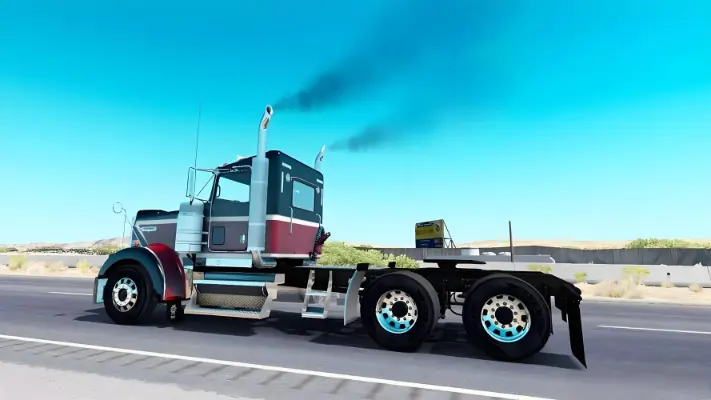
You might have seen American trucks with those towering vertical exhaust stacks and thought they look powerful—maybe even more “advanced.” It’s easy to assume that upward-facing exhaust pipes must be a better design.
But in reality, downward-facing exhaust pipes are the global standard, and the upward design is actually quite rare and not very practical.
Look around the world—Europe, Japan, China, and most other regions all use downward exhaust systems. The U.S. stands out, and the reason has everything to do with truck structure, not technology.
Why Some Trucks Exhaust Upward While Others Exhaust Downward
On American roads, the classic truck is the long-nose (conventional) type. It looks great, but has a major drawback:
Poor space efficiency.
A truck’s chassis needs to carry a lot of bulky equipment:
l large fuel tanks
l air reservoirs
l battery boxes
l mufflers
l plus things like natural gas tanks or water-spray systems
A long-nose cab already occupies a big chunk of frame space. That leaves little room for these components.
The exhaust system is especially demanding: to keep noise and temperature down, it needs a long pipe and a large muffler. With limited space under the truck, engineers have no choice but to mount the exhaust system upward, behind the cab. The exhaust simply exits toward the sky.This spatial limitation is the real reason American trucks often have upward exhaust stacks.

Upward Exhausting Isn’t “Advanced”—It’s a Compromise
The upward design looks imposing, but it has several downsides:
l The exhaust and muffler sit close to the cab, so noise, heat, and vibration reach the driver more easily.
l Exhaust blowing upward hurts aerodynamics and increases drag.
l Soot can contaminate cargo behind the cab.
l Rainwater can enter the pipe.
l Soot and particulates don’t fall out easily, making clogging more likely.In short, the point-upward design isn’t chosen for performance—it’s chosen because there’s nowhere else to put it.
Why Most Countries Don’t Use Upward Exhausts
Most regions use cab-over trucks, where the cab sits directly on top of the engine. This layout uses space far more efficiently. The area behind the cab is open and spacious, making it easy to mount equipment under the truck.
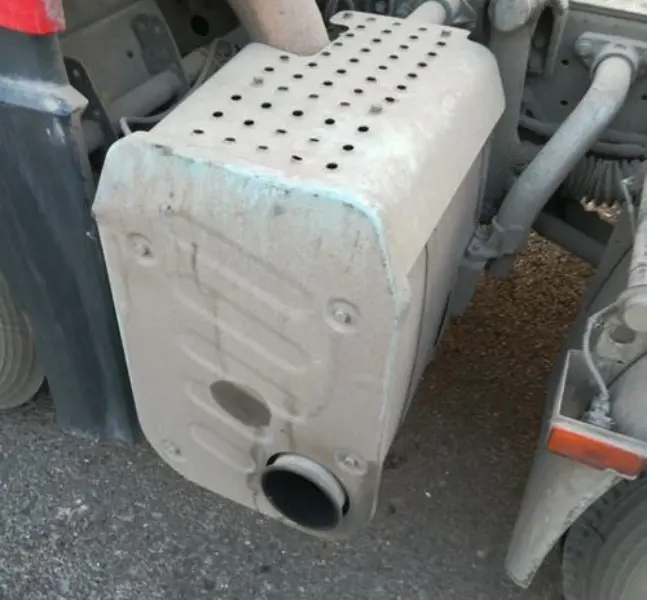
This makes downward exhaust routing the natural choice.
Benefits include:
l shorter exhaust path, less restriction
l easier particulate discharge
l simpler maintenance
l no contamination of cargo
l noise and heat kept away from the driverAside from occasionally kicking up dust, downward exhaust is superior in nearly every way.
Why the U.S. Likes Long-Nose Trucks and Others Don’t
It’s not about engineering preferences—it’s about regulations and road conditions.
In the U.S., truck length limits only apply to the trailer, not the tractor.
So a long cab doesn’t reduce cargo capacity at all. There’s no penalty for using a long-nose truck.
But in China, Europe, Japan, and many other regions, the entire vehicle is counted.
Using a long-nose design would shorten the cargo box, cutting efficiency—so it’s naturally unpopular.
Road conditions matter too:
l The U.S. has wide, open highways where long vehicles are easy to drive.
l Many other countries have narrow streets and tight corners, making shorter trucks a necessity.
So the difference comes down to rules and geography, not technology.
Long-Nose vs. Cab-Over: Each Has Its Pros and ConsLong-nose trucks
Pros:
l better aerodynamics on highways
l higher crash safety
l comfortable for long-distance driving
Cons:
l poor space efficiency
l not great for tight turns
l limited room for components like exhaust systems
Cab-over trucks
Pros:
l excellent space utilization
l highly maneuverable
l versatile chassis (easy to convert into dump trucks, flatbeds, etc.)
Cons:
l traditionally slightly less safe—though modern designs have improved a lot
Over the past few decades, the global trend has moved toward space-efficient designs. Even in the U.S., cab-over trucks are becoming more common again, and when they appear, their exhaust systems point downward just like everywhere else.
Previous:How Does a Turbocharger Work?
Send Inquiry
Online
 Sales Manager
 email
email
X
We use cookies to offer you a better browsing experience, analyze site traffic and personalize content. By using this site, you agree to our use of cookies.
Privacy Policy